
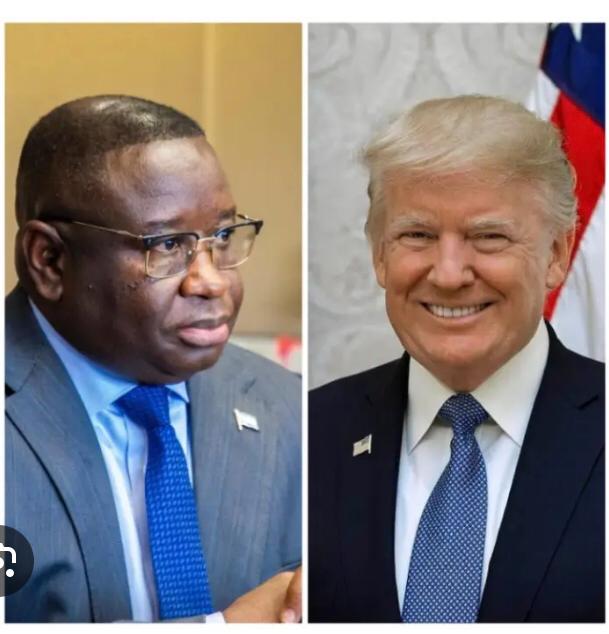


By: SAMUEL KARIM, CHIEF ABDUL BERO KAMARA : 19th December 2025
Visa regimes are not moral judgments; they are administrative verdicts based on evidence. When examined comparatively, Sierra Leone’s inability under President Julius Maada Bio to secure improved visa-related engagement with the United States stands out not as an inevitability, but as a failure of governance, diplomacy, and political seriousness. Across Africa, countries facing similar structural challenges have nonetheless managed to negotiate mobility frameworks, visa relaxations, or at the very least, sustained diplomatic engagement. Sierra Leone’s failure to do so exposes a deeper deficit in strategy and credibility.
Take Ghana, a country that has faced its own challenges with migration overstays and document fraud. Rather than respond defensively, Ghana invested in biometric passport systems, strengthened civil registries, and maintained constant technical engagement with U.S. and EU authorities. The result has been relative stability in visa relations and ongoing cooperation.
Rwanda, often dismissed by critics as overly centralised, nonetheless understands one essential truth: diplomacy is performance-based. By aligning domestic reforms with external assurances particularly in border management and identity systems it has positioned itself as a reliable partner despite limited resources.
Even Nigeria, with far greater migration pressures and overstay statistics than Sierra Leone, has sustained structured engagement with U.S. authorities. High-level diplomacy, security cooperation, and institutional reform however imperfect have kept channels open and negotiable.
Sierra Leone, by contrast, offers neither scale nor reform momentum as an excuse. Its migration footprint is comparatively small. Its population is manageable. Its administrative challenges are known and solvable. What is missing is political will translated into institutional action.
The Bio government’s approach suggests a fundamental misunderstanding of modern diplomacy. International partners no longer rely on declarations of goodwill; they assess systems. Weak documentation frameworks, inconsistent civil registration, limited inter-agency coordination, and reactive foreign policy inevitably undermine credibility abroad.
In comparative terms, Sierra Leone’s Ministry of Foreign Affairs appears underpowered and under-led. Where peers deploy ministers as active negotiators presenting reform data, timelines, and verification mechanisms Sierra Leone’s diplomatic engagement has been episodic and unconvincing.
The Foreign Affairs Minister’s limited visibility in substantive negotiations contrasts sharply with counterparts across the continent who understand that personal engagement at senior levels often determines outcomes. Diplomacy outsourced to press statements is diplomacy already lost.
The human consequences are not abstract. Ghanaian, Rwandan, and Nigerian students continue to access U.S. academic pathways. Their professionals participate in global networks. Sierra Leoneans, meanwhile, face higher scrutiny and fewer opportunities not because of individual merit, but because their state has failed to negotiate trust. Elites remain mobile. Ordinary citizens remain constrained. This disparity is not accidental; it is the direct result of governance failure masked as diplomatic grievance.
Sierra Leone’s visa-related challenges with the United States are not the product of discrimination or neglect. They are the predictable outcome of a government that confuses sovereignty with insulation from consequences, and diplomacy with entitlement.
Until the Bio administration internalizes that international mobility is earned through institutional discipline not demanded through complaint the country will continue to lag behind peers who understood the rules of the global system and acted accordingly.